
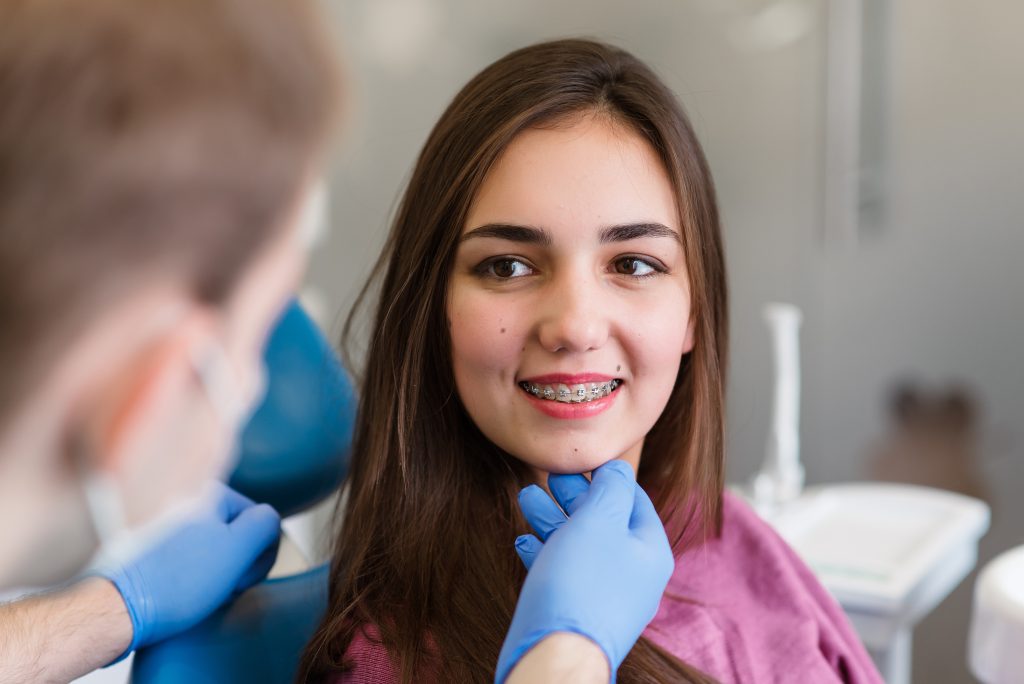
There you are, again scrutinizing your smile, pulling your lips just to check the issue in your teeth, and trying to improve your smile while hiding the problem. But the question is, will doing this again and again make your smile better or improve your dental health?
No, it will not magically resolve it. Although not every dental challenge needs orthodontic intervention, there are signs that should not be ignored.
8 Signs You May Need Orthodontic Treatment
The first time to fix your orthodontic issue is 12 to 14, but the second best time is now. This concludes that waiting does not solve the problem or make it easier. So take your keys and visit Vera Dental Care, because your teeth require proper treatment. Till then, these are the 8 signs that directly indicate that you or your child may need orthodontic treatment.
1. Crowding or Overlapping Teeth
This is one of the most common orthodontic problems and also a reason behind people wanting to have braces. Misalignment of teeth can happen because the jaw does not have a clear space for them to be in an aligned position. It can accelerate gum issues, trap food, cause difficulty in flossing, and, most importantly, it can impact your smile. Sometimes, mild cases can be resolved using Invisalign, but for moderate to worse cases, braces become a necessity. Also, for those who have malocclusion (crooked) teeth, dentists highly recommend going for braces because braces for crooked teeth help to protect from oral health risks.
2. Overbite, Underbite or Crossbite
When upper teeth drop far down past the lower front teeth is called an overbite; when lower front teeth stick past upper teeth called an underbite; and when top teeth close inside bottom teeth, it is called a crossbite. And when this condition happens, then it requires guidance from the dentist so that braces can be done to improve the misalignment of teeth.
3. Chronic Open Mouth Posture
This mainly happens with children, but due to habitual mouth breathing, some adults face these challenges. In children, when they make a habit of mouth breathing, this significantly impacts their facial growth pattern, can lead to a narrower face, and can also contribute to sleep-disordered breathing. Braces can widen narrow jaws and fix misaligned bites, which makes breathing through the nose difficult.
4. Difficulty Chewing, Biting, or Speaking
If your jaw clicks or pops while biting, chewing, or opening wide, then this is the beginning sign of jaw-related issues. If this is not treated in a timely manner, it can cause pain, which can cause further challenges. Temporomandibular joint (TMJ) is the name of this issue, and it usually happens due to misalignment of teeth or even pressure on jaw joint muscles. Make sure to check your child, because some children grind their teeth, and they don’t even know that this can lead to future challenges.
5. Gaps or Spacing Between Teeth
Due to missing teeth, multiple gaps along with spaces, or a single gap between front teeth throughout the mouth are common underlying problems. This is one of the common reasons behind getting braces. Braces for the gap or spacing between teeth not only require aesthetic correction, but they will also help to correct uneven distribution of chewing forces and speech difficulties.
6. Retained Baby Teeth
The most common scenario involves the shedding of the milk teeth at the right time so that they can pave the way for the eruption of the permanent teeth. At times, there may be a case where the milk tooth of a child is reluctant to shed, even though there is a tooth erupting beneath it. This needs to be considered seriously. The fact is that because the milk tooth did not shed, there was nowhere else for the adult tooth to erupt but to be misaligned or obstructed in the arch of the mouth.
7. Protruding Front Teeth
In the event that you realize that your kid’s front teeth are sticking out, there are more than cosmetic issues at hand. Sticking-out teeth, otherwise referred to as “overbites,” arise from several causes, including genetic makeup, thumb sucking, and continued use of pacifiers even when he/she passes the toddler age. Not only will they impact the appearance of your kid’s teeth, but they will make the front teeth more susceptible to injury from any falls and sporting activities.
8. Frequent Cheek and Tongue Biting
If your child gets bitten now and then, this is fine. However, if your child gets bitten frequently, then this means that your child has a bad bite. How does the biting problem arise? This arises because the teeth are not aligned properly; therefore, the tissue gets trapped between the teeth and causes frequent biting.
A Quick Self-check
After understanding the signs, now you may be thinking, do I need braces, so, here are some of the quick check which help you to know whether you or your child needs braces or not-
- Difficulty flossing to clean teeth
- Thumb sucking or tongue thrust habits
- Visible overcrowded teeth and overlapping teeth
- Visible gaps or spacing between teeth
- Upper teeth bite behind the lower teeth, and this is a clear sign of crossbite.
- Frequent tongue and cheek biting
- Continuous pain in the jaw along with clicking and popping
- Breathing through the mouth and snoring happening in children
Conclusion
Yes, not every dental imperfection requires treatment, but that does not mean that you don’t need professional assessment. Braces are not just to treat your misaligned teeth, but they also help correct several other challenges as well. And if you are looking for orthodontic treatment in Jaipur, then Vera Dental Care is one of the best choices for you. Their expertise helps people to take care of their dental health. So, be the one who wants to eat and drink their food, instead of someone who restricts themselves just because of their dental problem.
Book your consultation today!
FAQs
What are the signs that I need braces?
Overlapping of teeth, spacing or gaps, crooked teeth, crossbite, misalignment of teeth, jaw clicking while biting or opening your mouth, frequent cheek or tongue bite, mouth breathing, or thumb sucking (in children) are the most common signs that you need braces.
Is it possible for adults to get braces too?
Yes, it is completely possible for adults, and it also becomes the fastest growing area of dentistry. All you need is to have healthy gums and good oral hygiene.
Do braces affect daily life?
In the beginning, it will make you feel uncomfortable because of wires and brackets, but over time, you will get used to it.
How long does the treatment typically last?
It ranges anywhere between 6 months and 3 years, but it completely depends on the severity of the dental condition.
How do I know what type of braces are good for me?
Usually, traditional braces are the ones that are highly recommended, but as per your requirements, you can choose invisible aligners, lingual braces, or ceramic braces.